Shop / Product details
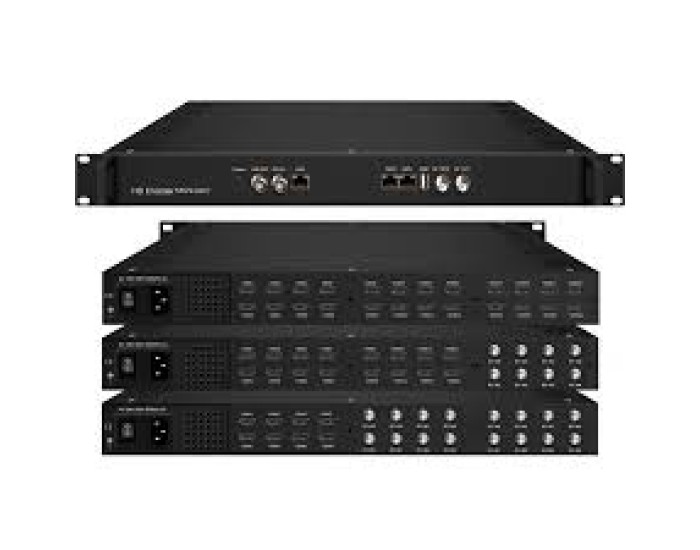
HOTEL ENCORDER TED HLS
Model: HOTEL ENCORDER TED HLS
● In stock
Choose a quantity and review product options before adding to your cart.
Product description
Based on the search results, "HOTEL ENCORDER TED HLS" likely refers to a video encoding system used within hotels for content delivery to guest room televisions. It involves a video encoder, possibly related to a specific product or company ("TED"), and utilizes the HTTP Live Streaming (HLS) protocol for efficient distribution.
Key components and process
A "HOTEL ENCORDER TED HLS" system would use the following components and processes:
Video Encoder: This device is the core of the system. It takes video input from sources like cable, satellite, or on-demand content servers and compresses the data. Search results show various encoders supporting H.264/H.265 compression and protocols like HLS.
TED (Potential "Tediton" Brand): While "TED" is not a recognized video encoder brand in the search results, Tediton is mentioned in relation to hotel door lock systems. It's possible the user is mistaken or referring to a less common product. However, the term "encoder" is also used for key card systems in hotels.
HLS (HTTP Live Streaming): The HLS protocol is a standard developed by Apple for streaming media over the internet. The encoder breaks down video content into small, consecutive files (segments) and encodes them at different quality levels to allow for adaptive bitrate streaming.
Internal Network: The HLS-encoded video streams are sent over the hotel's internal IP network to individual guest room televisions.
Servers: A hotel IPTV system would use streaming servers to manage and serve the HLS video segments to guest rooms.
Televisions: In the guest rooms, a television or set-top box would act as the HLS client, requesting and playing the video segments.
How it works
This system would work as follows:
Ingestion: An encoder receives live TV feeds or video-on-demand files.
Encoding and Segmentation: The encoder compresses the video and audio, then divides the stream into short, multi-quality segments (e.g., 480p, 720p, 1080p).
Playlist Creation: The encoder creates a playlist file (.m3u8) that lists the different video qualities and their segments.
Delivery: The video segments are placed on a server and sent over the hotel's network to the televisions.
Adaptive Streaming: As a guest watches, their TV's video player requests the playlist and automatically switches between the different quality streams based on the available network bandwidth, ensuring smooth and uninterrupted playback